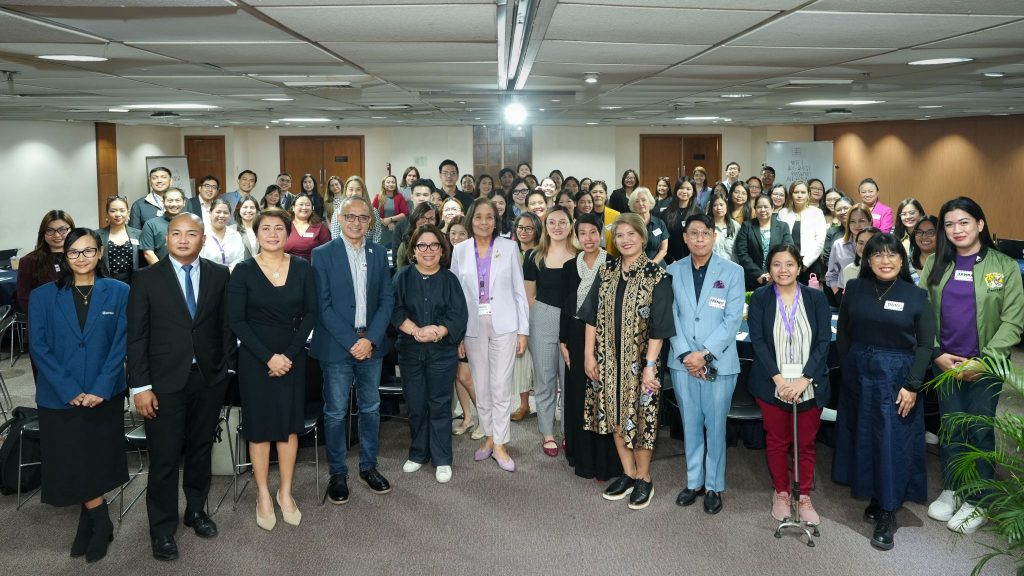
In photo: The PBCWE team with the event speakers and participants during the recently concluded Women’s Month celebration.
17 March 2026, Makati City, Philippines—The Philippine Business Coalition for Women Empowerment (PBCWE) brought together leaders across industries for its International Women’s Day event, “Safeguarding Women in the Age of AI: Digital Safety in the Workplace,” held recently at the AIM Conference Center Manila. The event underscored a resounding message: digital harm is now workplace harm, and organizations must urgently strengthen systems that protect women in today’s AI-enabled environments.
As Filipinos navigate increasingly digital and AI-driven workplaces, women face heightened risks of technology-facilitated gender-based violence (TFGBV) — from online harassment and cyberstalking to image-based abuse and algorithm-enabled discrimination. PBCWE emphasized that despite strong national laws, many workplaces remain unprepared to address these emerging threats.
AI Must Empower, Not Endanger Women
In her keynote, Rhea Luz Valbuena, Executive Director of the School of Computing and Information Technologies at Asia Pacific College, emphasized that as Artificial Intelligence reshapes how decisions are made in the workplace, organizations must treat digital safety and AI governance and core leadership responsibilities. She underscored that AI is no longer just automating tasks, but also decisions that impact hiring, promotion, and opportunity, making accountability critical. Without strong governance, she warned, “technology can amplify inequality,” particularly as women remain underrepresented in AI development and decision-making.
Meanwhile, Nadya Lazaro, PBCWE Training Manager, outlined the full spectrum of TFGBV—including sexual harassment, gendered misinformation, cyberstalking, doxxing, trolling, and image-based abuse—stressing the urgency for employers to adopt proactive safeguards. Her presentation outlined concrete recommendations, including anonymous reporting channels, digital ethics and consent training, and regular audits of digital tools to prevent misuse.

In photo: The Certificates of Appreciation were presented to the moderator and panelists in recognition of their contributions and the best practices they shared.
“Safety Is Shaped by People, Policies, and Platforms”
Top companies shared real-world solutions through a panel discussion moderated by Dr. Salin Kataria, Managing Director for Clinical Services and Specialized Business Operations at Carelon Global Solutions Philippines, where senior executives from leading organizations in the country shared practical strategies for building safer digital workplaces:
- P&A Grant Thornton highlighted the need to clearly define digital misconduct and ensure women’s representation in tech-related decision-making.
- Infosys BPM Philippines showcased their AI governance framework and “no job loss” approach, centering reskilling and human accountability.
- SGV & Co. emphasized scenario-based learning and real-world case simulations to build awareness and prevent digital misconduct.
- Asialink Group of Companies outlined systems to manage online grievances and navigate increasing exposure to external digital risks.
Across the panel, leaders agreed that AI must serve as assistive intelligence, not a replacement for human judgment, especially where bias and discrimination may arise. They also underscored the role of leadership in ethical AI use and the need for gender responsive‑ reskilling programs to ensure women can thrive in evolving digital roles.
PBCWE Calls for Action on Safer Digital Workplaces
In her closing message, PBCWE Executive Director, Julia Abad underscored that as technology reshapes the world of work, organizations must ensure it advances, rather than undermines, gender equality.
She emphasized that digital spaces are now integral to the workplace, and safeguarding women’ safety, dignity, and opportunities within them is a shared responsibility.
“Technology must not automate inequality, it must help close gaps,” Abad said, calling on leaders to embed accountability, invest in reskilling, and ensure that women are fully represented in shaping the digital future.