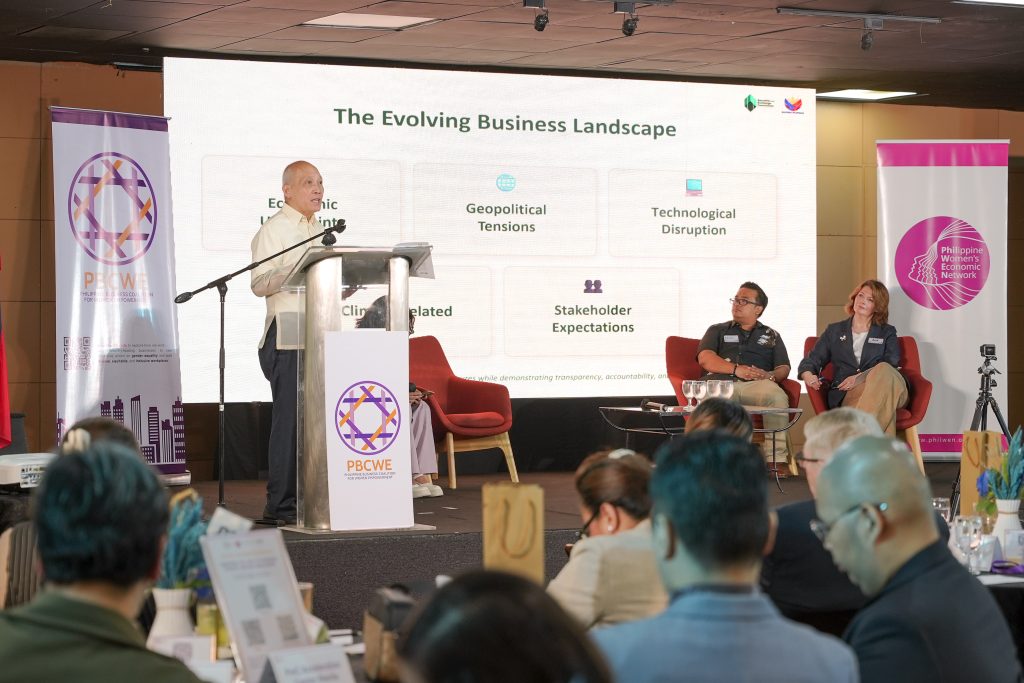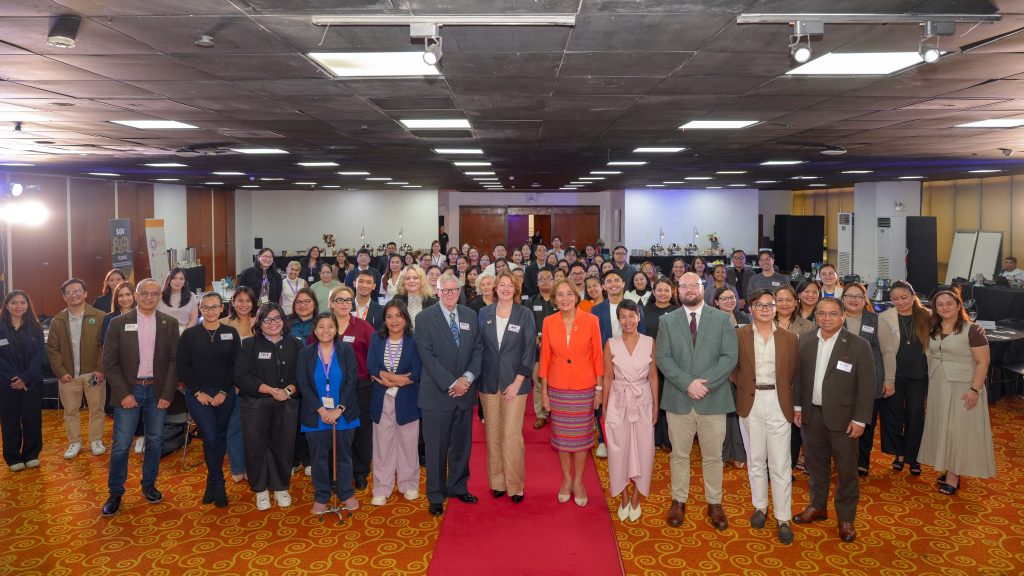
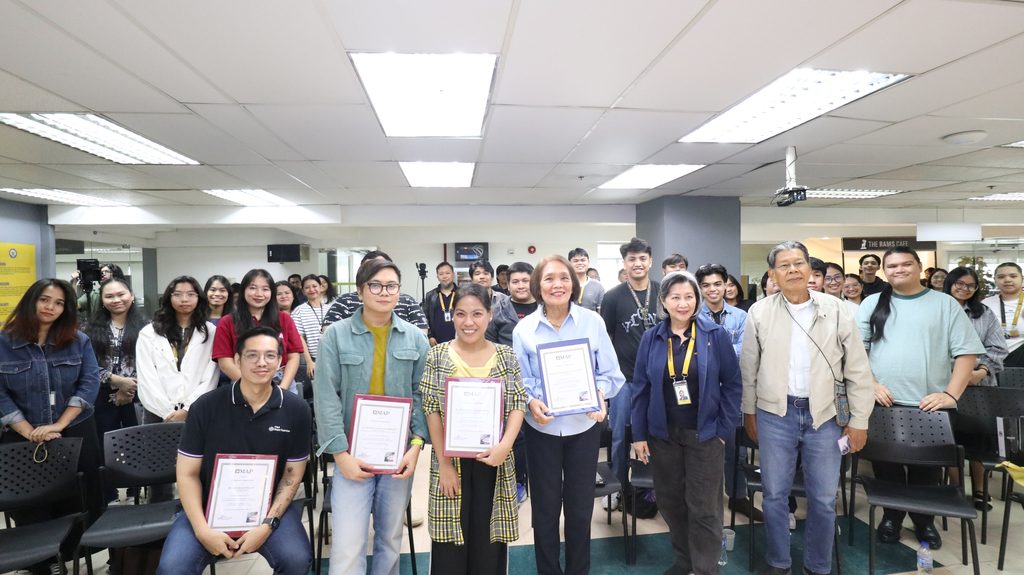
In photo: Resource speakers, participating students, and faculty members during the event.
Workplace gender equality and inclusion aren’t lessons that should begin on someone’s first day of work. That was the premise behind the Management Association of the Philippines Higher Education Institution’s Diversity, Equity, and Inclusion (MAP HEI DEI) Conversation, a three-hour hybrid event held on September 12, 2026 at Asia Pacific College, where the Philippine Business Coalition for Women Empowerment (PBCWE) joined MAP and P&A Grant Thornton to bring DEI out of the boardroom and into the classroom.
The audience was different from PBCWE’s usual roundtables of HR leaders and executives—this time, the room (and the online audience) was filled with over 300 senior high school and higher education students, faculty, career services professionals, and industry partners. The goal was just as ambitious: prepare young people, before they ever set foot in an office, to recognize what an inclusive workplace looks like, and to know their role in building one.
Meeting Students Where They Are
The event opened with welcome remarks from Atty. Gianna R. Montinola, Vice Chairperson of the MAP Education Committee and Trustee of Far Eastern University, who framed the morning around a simple idea: today’s students are tomorrow’s workforce, and the habits of inclusion they build now will shape the workplaces they eventually lead.
Ma. Aurora “Boots” D. Geotina-Garcia, Founding Chairperson of the Philippine Women’s Economic Network (PhilWEN), PBCWE’s Governing Council Chairperson, and a MAP DEI and Education Committee Representative, set the stage with the business case for workplace gender equality—drawing on International Labour Organization (ILO) research showing that diversity in leadership correlates with better business outcomes across multiple measures, from profitability to innovation to talent retention. Her message to students was direct: these aren’t abstract corporate policies. They concern you. They shape the opportunities, career paths, and everyday experiences that await you at work.
Turning Privilege Into a Tangible Lesson
One of the morning’s most memorable moments came from Abraham “Abe” Pelayo, Head of People and Culture at P&A Grant Thornton, who led students through a live Privilege Walk activity. Framed around ten simple statements—reliable internet access, someone in the family who could explain corporate life, the ability to afford transport and interview attire—the exercise let students physically see how unequal starting lines can exist long before anyone applies for an internship, without asking anyone to disclose their personal circumstances or assigning blame.
Abe grounded the exercise in a broader framework: the “four gaps” that shape whether a student’s school-to-work transition succeeds—the access gap (who hears about opportunities), the readiness gap (who already knows the unwritten rules of work), the belonging gap (who feels safe enough to speak up), and the growth gap (who gets real development and a path forward). He walked through how P&A Grant Thornton addresses each gap in practice, from its EMERGE internship program and structured mentoring to non-discrimination safeguards and fair recruitment—offering students a rare, concrete look at what inclusion looks like inside a professional services firm, not just in a policy handbook.
Widening the Lens: Intersectionality and Disability Inclusion
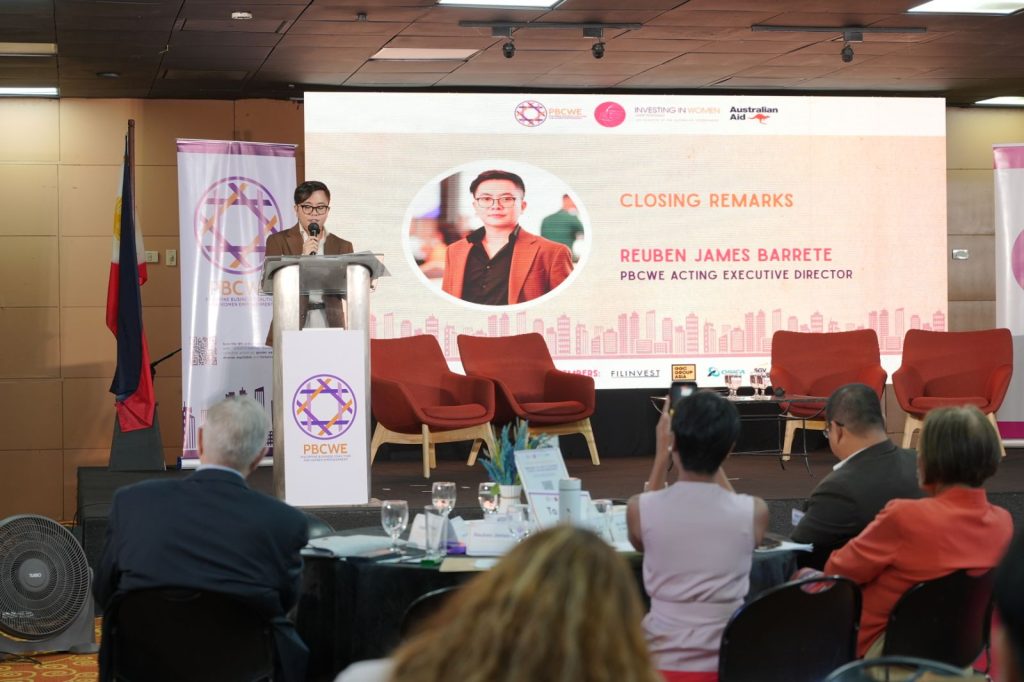
PBCWE’s Acting Executive Director, Reuben James “RJ” Barrete, guided students through the concept of intersectionality—how overlapping identities shape the discrimination or privilege a person experiences—and what it means to be an effective ally in school and later at work.
Jennifer Anne “Jen” Mendoza, PBCWE’s Organizational Development Adviser, followed with a session on disability inclusion, distinguishing disability from impairment, naming common barriers, and walking students through the basics of disability etiquette—practical knowledge many students will carry directly into their first internships and jobs.
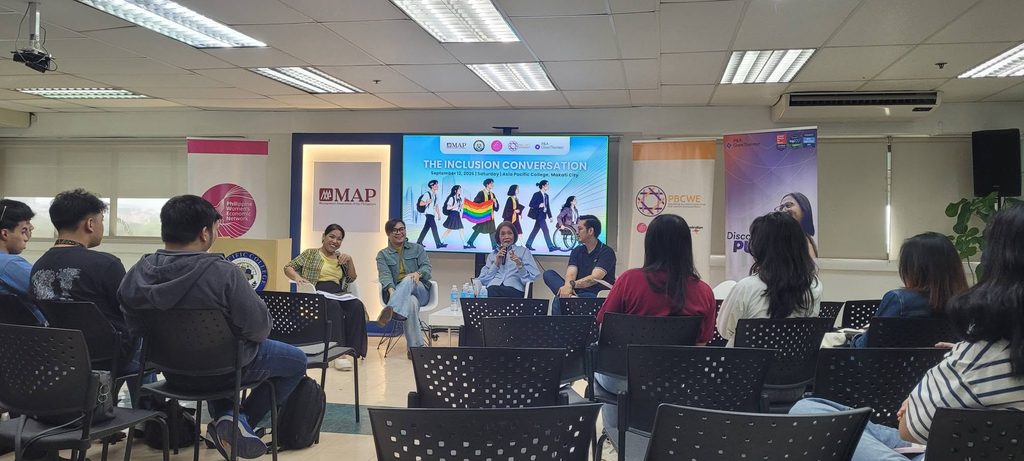
Resource speakers during “The Inclusion Conversation” segment.
The Conversation Continues: A Student-Led Panel
The heart of the event was a 75-minute panel, “The Inclusion Conversation: Let’s Talk About It,” moderated by Jen alongside John Carl “JC” Gerez of P&A Grant Thornton.
With all four speakers back on stage, students had the chance to ask questions directly—on navigating inclusion as a young professional, what interpersonal skills employers actually look for beyond technical competence, and how to disclose a disability or request accommodation without it being mistaken for special treatment.
The event closed with remarks from Dr. Edrian Peter B. Villanueva of the MAP Education Committee and University of Asia and the Pacific, and certificates for the panelists—a fitting bookend to a morning built entirely around exchange between generations and sectors.
Why This Work Matters
PBCWE’s roundtable discussions with sectors like Professional Services and IT-BPM have shown what happens when companies commit to workplace gender equality and DEI from the top down. The MAP HEI DEI Conversation shows the other half of that equation: preparing the people who will walk through those companies’ doors next, so that inclusion doesn’t have to be taught—or unlearned—on the job.
By partnering with MAP’s Education Committee and an active industry employer in P&A Grant Thornton, PBCWE extended its reach beyond its 61 member companies and into classrooms, giving students tools they can use immediately—in group projects, in internships, in their first performance review—long before “workplace gender equality” becomes something HR hands them in an onboarding packet.
It’s a natural extension of PBCWE’s founding mission. Since its launch in 2017 through Investing in Women, an initiative of the Australian Government, in partnership with PhilWEN, PBCWE has worked to make Philippine workplaces more equitable and inclusive.
Events like this one make clear that the coalition sees that work starting earlier than the workplace itself—with the students, educators, and future leaders who will define what Philippine workplaces look like next.